
 Which degree is right for you?
 Master of Public Policy
 Master of Public Affairs
 Doctoral Program
 Undergraduate Programs
 Global and Executive Programs
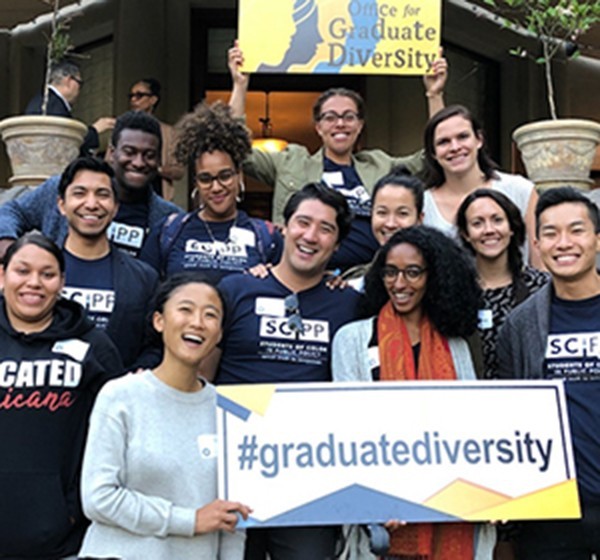
 Diversity, Equity, Inclusion
 Student Groups
 Alumni
 Directories
 Faculty
 Publications
 Working Papers
 Centers
 News Center

 Employment Stats
 Career Advising
 Career Resources
 Client-based Projects
 For Employers
 About GSPP
 Events
 Make a Gift
 Find a Program
 Find a Faculty Member
 Find a Center
Recent Publications
Did the 2007 Legal Arizona Workers Act Reduce the State’s Unauthorized Immigrant Population?
Bohn Sarah; Lofstrom, Magnus and Steven Raphael, (2014), “Did the 2007 Legal Arizona Workers Act Reduce the State’s Unauthorized Immigrant Population,” Review of Economics and Statistics, 96(2): 258-269.
2014-01-01California’s Public Safety Realignment and Recidivism
Lofstrom, Magnus; Raphael, Steven and Rykent Gratett (2014), California’s Public Safety Realignment and Recidivism, Public Policy Institute of California, San Francisco, CA.
2014-01-01The New Scarlet Letter? Negotiating the U.S. Labor Market With a Criminal Recod
Raphael, Steven (2014), The New Scarlet Letter? Negotiating the U.S. Labor Market with a Criminal Record, W.E. Upjohn Institute for Employment Research, Kalamazoo, MI.
2014-01-01How Do We Reduce Incarceration Rates While Maintaining Public Safety?
Raphael, Steven (2014), “How Do We Reduce Incarceration Rates While Maintaining Public Safety?” Criminology and Public Policy, 13(4): 579-597.
2014-01-01Incarceration and Incapacitation: Evidence from the 2006 Italian Collective Pardon
Buonanno, Paolo and Steven Raphael (2013), “Incarceration and Incapacitation: Evidence from the 2006 Italian Collective Pardon,” American Economic Review, 103(6): 2437-2465.
2013-12-31Environmental Commodities Markets and Emissions Trading: Towards a Low-Carbon Future
Blas Luis Pérez Henríquez, RFF Press, 2013.
See book description here.
2013-12-22Why Are So Many Americans in Prison?
Raphael, Steven and Michael Stoll, Why Are So Many Americans in Prison?, Russell Sage Foundation, New York, NY (2013).
2013-12-19Do conditional cash transfer programs shift votes? Evidence from the Honduran PRAF
Linos E. 2013. Do Randomized Social Programs Shift Votes? Experimental Evidence from the Honduran PRAF. Electoral Studies. 32(4):864-874.
2013-12-01How do national social programs influence local voting? This study utilizes the experimental set up of a conditional cash transfer program to show that small, targeted cash transfers can have large electoral effects. The Honduran PRAFprogram allocated an average of $18 per capita per year to poor households within municipalities that were randomly assigned to receive the program. Although the program was administered at the national level, the program increased an incumbent mayor's re-election probabilities by 39%, without significantly influencing voting behavior in presidential elections. Moreover, the evidence suggests that transferring cash to poor households were more effective at increasing political support than interventions providing public goods for poor villages.