 Which degree is right for you?
 Master of Public Policy
 Master of Public Affairs
 Doctoral Program
 Undergraduate Programs
 Global and Executive Programs
 Diversity, Equity, Inclusion
 Student Groups
 Alumni
 Directories
 Faculty
 Publications
 Working Papers
 Centers
 News Center

 Employment Stats
 Career Advising
 Career Resources
 Client-based Projects
 For Employers
 About GSPP
 Events
 Make a Gift
 Find a Program
 Find a Faculty Member
 Find a Center
Student Profile: Sean Darling-Hammond
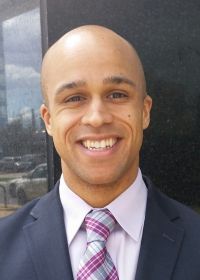
What were you doing before you came to GSPP?
Before graduate school, I was living a uniquely bi-coastal life. Despite being born in DC, I finished high school in California and then moved to the frozen east (at the time, this felt like being "North of the Wall”, for those who watch Game of Thrones). I earned my BA in Sociology at Harvard, where I directed most of my energy toward taking graduate-level quantitative methods courses. I also worked for the Kennedy School of Government on an innovative, mixed-methods project to discern the root causes of cyclical poverty in urban settings. I somehow found the time to take and earn a certificate in Japanese!
For five years after graduating, I served as the Director of Research for Hattaway Communications, a mission-driven consulting firm. At Hattaway, I helped conduct research to develop messages to reframe the mortgage and credit crisis and contribute to passing the Dodd-Frank Wall Street Reform and Consumer Protection Act, to encourage "difficult to count" populations to fill out the decennial census and "be counted," and took on a range of policy-relevant persuasion challenges. I then moved to Boston to serve as the Press Manager for the John Kerry for Senate Campaign in 2008. I migrated between California, Boston, and DC...all before getting admitted to Berkeley Law. After law school, I moved back to DC, where I clerked for a federal judge in the District Court of Maryland before spending two years practicing law, first as an Associate at Hogan Lovells and then as a Law and Policy Consultant for Education Counsel. Both experiences provided a deep understanding of how education law, regulations, and policies are designed, and how they often do not realize their full potential.
What made you decide to pursue a PhD?
Even in the throes of working for a big law firm, and working the absurd hours associated with such an endeavor, I found myself consistently finding research projects and spending inordinate amounts of time creating and analyzing data sets to answer policy questions that matter to me. It became obvious that I should turn my passion into my full-time job after publishing a few articles for the Nation based on my analysis and research. Although, in a way, I always knew that I would pursue a PhD in a social science discipline, as I am deeply invested in the notion that we can improve human thriving by expanding human knowledge. Joining those on the frontiers of expanding human knowledge has always been an extremely exciting proposition to me. In addition, I love teaching. Like, I love, love teaching. I feel called to help students of all backgrounds make statistics, law, policy, and psychology theirs so they can use those tools to create a better world.
Tell us more about your research. What drew you to this subject matter?
I have two strands of research. First, I research the causal impact of alternative discipline policies in K-12 schools. This research stems from my experience serving as the director of a restorative justice program at Berkeley High School, and also from my experience representing the special education rights of K-12 students in juvenile proceedings at the East Bay Community Law Center while at Berkeley Law. Both experiences made clear to me the incredibly harmful impacts of excessively harsh discipline policies. They also elucidated the potential of alternatives, like restorative justice, not only to avoid the harms associated with excessive discipline, but also to create inclusive, cohesive, and nurturing academic communities.
Secondly, I conduct causal research to ascertain the impact of various forms of intergroup contact on bias. This research stems from my identity. Both of my parents are racially mixed. Growing up, my father used to tell me that "you can't hate any group without hating a member of your family." The obvious answer was to try to love and live connected to people from various cultures and countries. This created a real drive within me to create a world where people of all backgrounds can connect deeply. I see intergroup bias as the biggest barrier to creating such a world and thoughtful contact as the most promising remedy to this challenge.
Why Goldman? What are some things that you're most excited about taking advantage of during your time here?
Berkeley is just a magical place. When I came here for law school, I was immediately struck by how much agency students have to create an educational environment in which they can thrive. I was even fortunate enough to help lead a student-driven effort to improve legal pedagogy. Imagine it -- law students telling law professors how to teach more effectively...only at Berkeley! I came to Goldman not necessarily hoping to tell professors how to teach but certainly hoping for a similar experience in terms of having agency over my educational journey. Goldman has not disappointed -- if anything, I've been pleasantly surprised again and again.
I also knew and know that there are many incredibly talented, insightful researchers at Berkeley who work in the areas that drive me (education, quantitative methods, discipline, behavioral science, etc.), and wanted to drink from the fire-hose of their knowledge and expertise. My putative dissertation committee is literally a dream team that, if so tasked, could take on an incredible array of daunting policy challenges with panache.
What are your plans for after you graduate?
I hope to serve as a professor in an education, policy, or law school, helping to conduct transformative research, and inspiring future generations of researchers, practitioners, and change-makers to help communities thrive.
In my free time, I adore laughing and enjoying the Bay Area with my wife, Valentina, and our sweet, little 6-month-old baby boy, Kofi. Valentina is from Chennai, a city in South India in which they speak Tamil. I've been taking Tamil at Berkeley this semester in order to help make sure that Kofi knows his mother tongue, and it has helped me feel even closer to my wonderful family. (For those wondering, Tamil is infinitely harder to learn than Japanese... so I've picked an interesting time in my life to try to learn it!) I also train for and compete in Ninja Warrior competitions. For the last five years, I have been a competitor on NBC's TV show, and I have also traveled around the country to compete against top athletes in the sport in local competitions. I genuinely have no idea why I have been so lucky in my ninja warrior endeavors, but being able to compete alongside such wonderful folks is such a blessing that I long since decided not to look a gift horse in the mouth! While I definitely don't have the most typical of work-life balance, it has been a wonderful one that has helped me feel deeply energized in my PhD studies.