
 Which degree is right for you?
 Master of Public Policy
 Master of Public Affairs
 Doctoral Program
 Undergraduate Programs
 Global and Executive Programs
 Diversity, Equity, Inclusion
 Student Groups
 Alumni
 Directories
 Faculty
 Publications
 Working Papers
 Centers
 News Center
 Employment Stats
 Career Advising
 Career Resources
 Client-based Projects
 For Employers
 About GSPP
 Events
 Make a Gift
 Find a Program
 Find a Faculty Member
 Find a Center
Hopes for Policing Reform: A GSPP Conversation with Tedros Habib and Domingo Williams
Tedros Habib and Domingo Williams are Master of Public Affairs students at the Goldman School. They are also active-duty police officers. Below, they share their reflections on how policing is changing, what brought them to the Goldman School, and what policy changes they would most like to see in their field.
Can you tell us more about your work and what your day-to-day looks like?
Tedros Habib: I'm currently a police sergeant in the sexual assault investigations unit of the San Jose police department. My day-to-day responsibilities include supervising a team of detectives as well as periodically reviewing and assigning cases to three other teams of detectives on the unit. I also collaborate with county partners as part of our Sexual Assault Response Team committee where we assess and revise policies in our county's sexual assault protocol in a way that promotes a more survivor-centered approach to sexual assault investigations. I also serve as editor of our unit's monthly newsletter, with the input of our community partners, which is disseminated to our department to provide up-to-date case law and guidance for patrol officers during sexual assault investigations.
Domingo Williams: I am a Sergeant in the Major Crimes Unit of the San Francisco police department, specially assigned to the Robbery Detail as one of its investigators. I investigate serious robberies ranging from street robberies, carjackings, and robberies of banks and commercial establishments. Generally, the cases that come across my desk are higher profile and require a coordinated effort with other units within the department such as the Gang Task Force, Narcotics, and Patrol.
My day starts with turning on the police radio to listen to broadcasting of all incidents happening in the city in real time, I review the status of my current cases, interview victims and witnesses, and follow up on any existing leads ascertained from them or woven into the initial police report. I visit crime scenes, walk paths possibly taken by suspect(s), and try and piece together what evidence may be present. In general, that's a typical day. Sprinkle in 1-2 more cups of coffee, lunch, and copious amounts of typing, and you have an investigator’s life. If by chance a crime in progress is reported over the radio and falls within my purview, that takes priority. I respond to the scene, and take over the investigation from the earliest possible stage. The demands of the position fluctuate, but the goals are the same. Gather and report the facts.
What brought you to GSPP?
Williams: I joined the police department with the goal of providing access to my community and others that generally do not view the system of policing as an asset but more as a liability. As I navigated the early years as a police officer on the beat, I quickly learned that my impact was with one person at a time. Although honorable and noble, I wanted to affect positive change on a larger scale. I thought to myself, “Why change how people implement policy when you can change the policy people implement?” I saw the potential as exponential and my quest into the public policy space began. I knew in order to tackle the tall task in front of me, I needed the best foundation. Goldman quickly became the obvious choice.
Habib: When I first applied to GSPP, I had over thirteen years of police work behind me and I found myself wanting to do more in terms of being able to have both a positive influence on the community as well as on officers of color who were newer to police work. I thought graduate school would help me broaden my perspective and put me in a place where I could have greater influence. What police do is a direct result of public policy and Goldman is the top public policy school in the nation. I shot my shot with the school and was fortunately given the opportunity to enter the MPA program. George Floyd was murdered the week after our cohort started. That, along with the aftermath, only strengthened my resolve in trying to be a positive contributor and finding a place in which I could help bring us together and move forward as a society.
What are your predictions for how policing will evolve over the next four years locally versus nationally?
Habib: It depends. Just like the federal response to the pandemic last year, sometimes leaving decisions up to local and state governments can prolong a problem that has already been proven to be systemic nationwide. Without national standards and accountability set for meeting those standards, I can see us not moving very far, if at all, in terms of progress.
Williams: Tough question, but I'm optimistic. Having engaged with law enforcement personnel and agencies from across the country, I have realized that the San Francisco police is leaps and bounds ahead of many jurisdictions as it pertains to use of force policy, citizen oversight, and diversity. With this being said, I look for departments like SFPD to lead the nation in reform.
What is the number one policy change you would like to see in your field?
Williams: The one policy change that I would like to see is a national standardization of policing procedure, use of force policy, and accountability. There are many layers to this but standardizing the profession would be what I would like to see happen first.
Habib: If a department decides to fire an officer with cause or an officer resigns before an investigation into their conduct can be completed, they should not be allowed to be a peace officer anywhere else.
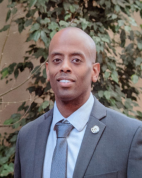 Tedros Habib (MPA Candidate ‘21) was born and raised in South Los Angeles. His mom sent him to different schools all over the city in order to give him an opportunity for education that wasn’t available where they lived. He was able to attend UC Irvine in 2001 and graduated with a B.A. in Film and Media Studies in 2005. He worked in parking enforcement before entering the police academy in 2006. He worked in a variety of assignments as a police officer before being promoted to sergeant in 2018. He currently works as a detective sergeant in Sexual Assault Investigations.
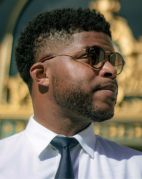
Domingo Douglas Trent Williams (MPA Candidate ‘21) was born and raised in San Francisco. The values that were instilled in him at an early age by his father as an entrepreneur and his mother as a paralegal, have guided not only his decision making today. Enormously proud of his home, he left for college and attended Marshall University and UNLV with the singular intention of returning and becoming a part of the rich fabric of the City by the Bay. Focused with a growth mindset, he played collegiate football, founded his own business, and used travel as a constant source of enlightenment. Called to law enforcement as a means of positively impacting his community as a representative and an access point to services that are traditionally punitive and not supportive, Williams thrived within an organization that is still grappling with cultural change. His conviction that policy could have a greater reach refocused his sights on reworking a system that systematically has marginalized entire communities on the basis of race, sex, and gender identity.
Disclaimer: Tedros Habib and Domingo WIlliams' answers don't represent the views of the San Francisco and San Jose police departments.