
 Which degree is right for you?
 Master of Public Policy
 Master of Public Affairs
 Doctoral Program
 Undergraduate Programs
 Global and Executive Programs
 Diversity, Equity, Inclusion
 Student Groups
 Alumni
 Directories
 Faculty
 Publications
 Working Papers
 Centers
 News Center
 Employment Stats
 Career Advising
 Career Resources
 Client-based Projects
 For Employers
 About GSPP
 Events
 Make a Gift
 Find a Program
 Find a Faculty Member
 Find a Center
Meet Daniel Sargent: Longtime UC Berkeley History Professor Joins GSPP Faculty
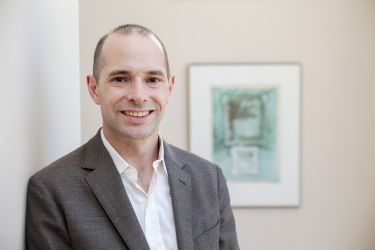
You have long served as an Associate Professor of History at UC Berkeley, before joining the GSPP faculty. How does your training as a historian influence or improve your approach to the study of public policy? Do both fields benefit from an interdisciplinary approach?
While there are a handful of public policy schools that employ historians, this is not always typical. Yet, history is pervasive in the policy arena – just think about how commonplace analogies like the New Deal or the Marshall Plan have become in our contemporary political vernacular. The reality is that policy practitioners are users of history in one way or another, so you might as well be informed users. As a historian with a new appointment at GSPP, I hope to help emerging public policy practitioners acquire the methodological grounding in history that will enable them to become informed users of history.
Wedding interdisciplinary methodologies yields several additional opportunities. For example, political scientists in the international relations tradition often explain state behavior through the lens of political structure, emphasizing how the state’s relationship with the broader system can explain why the state behaves as it does. Historians, in contrast, often emphasize how individual decision-makers respond to a particular set of circumstances. When these different methodologies are in conversation, the result can be cacophonous but also quite productive: different explanatory paradigms often move us towards deeper understanding.
Your most recent book, A Superpower Transformed, focused on how consequential the 1970s were in reshaping US Foreign Policy. You are also a co-editor of The Shock of the Global: The 1970s in Perspective. What drew you to this subject matter?
My first book was about a particular moment in the United States’ experience as a superpower, which is relevant to the policy community today. One of the lessons from the book is that it’s easy for policymakers to find themselves intellectually captive to existing ways of doing things. I was struck by the stranglehold that the Cold War had on decision-makers as a conceptual framework in the 1970s. During this decade, the United States confronted several global challenges that had little to do with the Cold War: the breakdown of the Bretton Woods system of fixed exchange rates, the oil/energy crisis and the cascade of ensuing implications for domestic policy. These were not challenges that were easily understood or remedied within a Cold War paradigm, and yet decision-makers (at least in foreign policy) insisted on viewing these problems through the lens of the Cold War. It wasn't until policymakers took off that conceptual lens that they were able to move towards constructive solutions.
The lesson here is that when policymakers understand their position in relation to larger historical dynamics, this opens up alternative ways of comprehending the challenges we face in our own times.
What are some of your current projects?
I’m interested in the so-called liberal world order that the United States purportedly built at the end of the Second World War. In reality, the genesis of this order is more complicated, and there was a significant transformation between the 1940s and the present day. I'm interested in how we got to today’s point of apparent crisis in order to better understand where things might go in the future.
I'm also interested in what history might teach us in order to better comprehend the challenge of climate change. While I don’t think there are true historical analogies for understanding carbon and climate, I'm also not prepared to call this challenge unprecedented. There are ways in which we can learn from the experiences of earlier social mobilizations to confront the high-impact yet low-urgency challenge of climate change. While lessons from previous international efforts to address transnational threats are not specifically transferrable to climate change, we still have plenty to learn from these efforts. The scientific and technical community has done an outstanding job bringing our collective attention to the urgency of climate change, but confronting this challenge is now primarily a political, social, and economic problem. Scientists have blazed a trail for the rest of us to follow.
What are you most looking forward to about joining the GSPP faculty?
I’m looking forward to having colleagues from different disciplinary traditions, who are interested in grappling with the problems of the present and the future. Although I study the past, I have three little kids: it would be irresponsible for me not to be interested in the future. I'm also excited about being able to work with and support the intellectual development of students who are determined to make a difference in the world, in communities and institutions.
Tell us more about yourself. What keeps you busy outside of UC Berkeley?
Outside of daycare pickup and drop-off, my primary recreation, I enjoy all of the normal Northern California outdoor pursuits like running, skiing, etc. Although I grew up in the UK (just outside of Brighton, on the South Coast), I’m enjoying living in Northern California!