

 Which degree is right for you?
 Master of Public Policy
 Master of Public Affairs
 Doctoral Program
 Undergraduate Programs
 Global and Executive Programs
 Diversity, Equity, Inclusion
 Student Groups
 Alumni
 Directories
 Faculty
 Publications
 Working Papers
 Centers
 News Center

 Employment Stats
 Career Advising
 Career Resources
 Client-based Projects
 For Employers
 About GSPP
 Events
 Make a Gift
 Find a Program
 Find a Faculty Member
 Find a Center
Recent Episodes
Streets littered with bicycles and scooters represent the latest skirmish between Bay Area city administrators and the technology sector. In a region ready to confront carbon emissions and ready to embrace pedestrian-friendly streets, scooters have become the next item in an evergreen local debate on what mode of transport should dominant city streets, who should decide, and how to keep city residents safe.
San Francisco’s proximity to the hub of the technology sector makes it a “petri dish” for experimentation, says Joe Fitzgerald Rodriguez, transportation reporter for the San Francisco Examiner in conversation with UC Berkeley public policy student Reem Rayef about the issues that surround scooters. But -- while Bay Area tech companies seek to be a major player in urban transportation with its disruptive technologies, municipalities often have other goals in mind.
Tune into this lively conversation on how cities are responding to scooters, how companies are trying to get around city regulation, when local residents revolt against new technologies -- and whether scooters really are a better way to get around.
Speakers featured on this epsiode
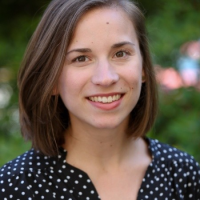 Brianne Eby is a policy analyst for Eno, where she conducts research on various topics related to the transportation industry. She has written at length about what dockless scooters mean in the context of reduced carbon emissions, disruption of car culture, equity in public transit, and increased investment in public transportation infrastructure. Prior to joining Eno, Brianne conducted research on transportation behaviors as a graduate student, and on helping cities and metropolitan regions achieve inclusive and sustainable growth as a research assistant at the Brookings Institution. Brianne earned her B.A. in Psychology from Indiana University and her M.S. in Environmental Studies from the University of Colorado-Boulder. Follow her on Twitter: @brianne_eby.
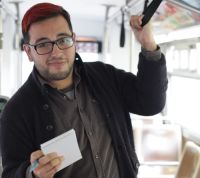 Joe Fitzgerald Rodriguez covers transportation for the San Francisco Examiner. Joe is a long time San Francisco resident and pretty obsessed with transit, so he has followed (and written about) the scooter issue closely. He also writes the weekly political On Guard column. Reach him at joe@sfexaminer.com. Follow him on Twitter: @FitzTheReporter.
As rents continue to skyrocket in the Bay Area, housing displacement is disproportionately affecting people of color. A “geography of racialized inequality” has long been set in the region -- but today’s segregation is taking a new configuration as new housing market preferences take root. 80 percent of neighborhoods in the East Bay experiencing gentrification were previously redlined, according to a finding from UC Berkeley’s Urban Displacement Project is providing research and data tools to characterize the nature of this displacement in the Bay Area. In this episode, UC Berkeley public policy student Spencer Bowen and urban planning alumnus Philip Verma discuss some of the data analysis and what it reveals about the the Bay Area’s housing market today. Tune in here.
Are you interested in getting engaged with housing issues in the Bay Area? Here are three suggestions from Philip Verma:
- Read Evicted by Matthew Desmond
- Read more about California housing policy. You can start with SPUR and the Terner Center.
- Every neighborhood has slightly different challenges. Find out what challenges your neighbors are facing by talking to your local council member.
- Learn more about Urban Displacement Project’s data tool.
Speakers featured on this episode
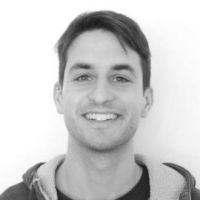 Philip Verma is a Master of City Planning student interested in the intersection of housing and environmental health, especially for low-income renters. He has worked as a housing advocate in New York and Oakland, helping tenants fight evictions, harassment, illegal rent increases, and substandard conditions. He spent two years as outreach director for a sustainable transportation NGO in Bogotá. Philip graduated from Columbia University with a B.A. in History.
Young voter turnout is lower than overall voter turnout. But, as we approach the 2018 midterm elections, UC Berkeley public policy student Sarah Edwards speaks with Buffy Wicks, Sarah Anzia, and others to find that there are reasons to be optimistic about young voter engagement:
- Millennials are opinion leaders -- and have helped transform the social, cultural and political landscape in the last decade
- Young people are a tech-savvy cohort who can and are deploying technology to get out the vote
- While hot-button issues for young voters have been notably muted or absent, increasing concern around college loan debt and social safety nets are poised to drive interest and engagement higher
Wondering how to get more involved and have better conversations about voter engagement? Here’s a few ideas from our team:
- Vote!
- Attend community meetings in your local community
- Join our mailing list at Berkeley Institute for Young Americans
Speakers featured on this episode
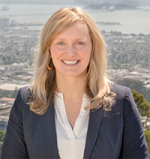
Buffy Wicks is a candidate for the CA State Assembly in District 15. She was one of the architects of President Barack Obama's 2008 and 2012 campaigns.
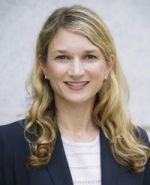
Sarah Anzia is a political scientist who studies American politics with a focus on state and local government, elections, interest groups, political parties, and public policy. She is the Michelle J. Schwartz Associate Professor of Public Policy & Associate Professor of Political Science at the Goldman School of Public Policy.
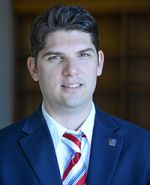
Joshua J Dyck studies American politics, public opinion and voting behavior, elections, and state politics. He is Associate Professor at the University of Massachusetts, Lowell.
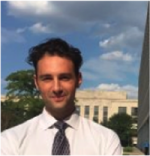
Max Lubin is the CEO of Rise, Inc and the founder of Vote Crew. He is a graduate student at the Goldman School of Public Policy at the University of California, Berkeley
Food surrounds us -- and yet we can become careless about how food is transformed from the farm to something palatable on our plate. UC Berkeley public policy student, Reem Rayef, interviews Nina Ichikawa at the Berkeley Food Institute about what consumers should be thinking about in their individual consumption choices, but also what the impact the aggregation of those choices means for food overall.
Considering the role of multiple actors in U.S. food policy, they also discuss how coalitions of like-minded groups can mobilize greater and more equitable access to healthy foods. Get some food for thought with this episode all about food.
Wondering how to get more involved and have better conversations about food policy? Here are a few ideas from our team:
- Form a more mindful cohort of food consumers with a book club, reading The Omnivore’s Dilemma or Six Seasons.
- Cook a local meal. Try shopping at the farmer’s market and learning about the sources of your food and the farmers who grew them.
Speakers featured on this episode
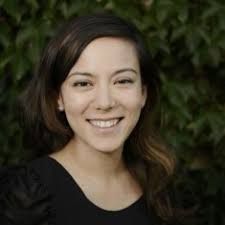
Nina F. Ichikawa is the policy director of the Berkeley Food Institute. She is a fourth-generation Californian and policy professional dedicated to making good food accessible, sustainable, and culturally appropriate. Prior to joining BFI, she served in the office of Senator Daniel K. Inouye and with the US Department of Agriculture’s “Know Your Farmer, Know Your Food” Initiative. In 2011, she was named a Food and Community Fellow by the Institute for Agriculture and Trade Policy. In 2009 she launched the Food and Agriculture section for Hyphen magazine, and she has also written for Civil Eats, Grist, Al-Jazeera America, NBCNews.com, and Rafu Shimpo. Her writings on Asian American food and farming have been published in Amerasia Journal and Eating Asian America: A Food Studies Reader. Following research on sustainable food systems in rural Japan and Mexico, Nina received an MA in International Relations/Food Policy from Meiji Gakuin University and a BA in Interdisciplinary Studies/Food Policy from UC Berkeley.
Historically, prosecutors’ records were judged by the number of people who were put behind bars. For Tara Regan Anderson (MPP 2010) and her colleagues in San Francisco Defense Attorney Gascon’s office, that’s no longer the goal. Join her and Jonathan Stein (MMP/JD 2013) for a conversation about the shift in thinking around prosecution and the impact this shift is having on police officers, individuals interacting with the police, and the people connected to those individuals. In this episode, Tara talks about her work to support children of incarcerated parents and elaborates on how the criminal justice system affects all those involved, not just the individual entering the system.
Interested in learning more about the work being done to support children of those in the criminal justice system? Here are three suggestions:
- Explore the research from the Quattrone Center
- Learn more about on-the-ground efforts from Project What!
- Read Tara’s article “The Power of One Embrace”, shared on the National Council on Crime & Delinquency’s
As the country takes stock of the growing number of stories of people of color dying at the hands of police officers, more and more we are hearing about the role of implicit bias. Implicit bias trainings are being implemented at police districts across the nation—but what is implicit bias, and how do we tackle it? In this episode, Goldman School Professor Jack Glaser and MPA alumna Jasmine Jones talk about the brain’s role in implicit bias, the difference between implicit bias and prejudice, and the limits of trying to break the patterns of implicit bias without changing the societal landscape.
Listen to Jack and Jasmine unpack the research about whether public policies can provide a solution for overcoming implicit bias in policing.
Speakers featured on this epsiode
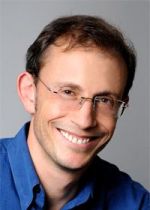 Jack Glaser is Professor and Associate Dean of Public Policy at the Goldman School of Public Policy. He is a social psychologist whose primary research interest is in stereotyping, prejudice, and discrimination. He studies these intergroup biases at multiple levels of analysis. For example, he investigates the unconscious operation of stereotypes and prejudice using computerized reaction time methods, and is investigating the implications of such subtle forms of bias in law enforcement. In particular, he is interested in racial profiling, especially as it relates to the psychology of stereotyping, and the self-fulfilling effects of such stereotype-based discrimination.
Additionally, Professor Glaser has conducted research on a very extreme manifestation of intergroup bias - hate crime - and has carried out analyses of historical data as well as racist rhetoric on the Internet to challenge assumptions about economic predictors of intergroup violence. Another area of interest is in electoral politics and political ideology, specifically the role of emotion (as experienced and expressed) in politics. Professor Glaser is working with the Center for Policing Equity as one of the principal investigators on a National Science Foundation- and Google-funded project to build a National Justice Database of police stops and use of force incidents. He is the author of Suspect Race: Causes & Consequences of Racial Profiling.
 Goldman School student Jessie Harney speaks with host Jonathan Stein (MPP/JD '13) about mental health support for people suffering from PTSD, especially victims of sexual assault.
Jessie is a Master of Public Policy candidate at the Goldman School of Public Policy. She has a Bachelor of Science in Psychology from Truman State University and a Master of Science in Biostatistics from Washington University in St. Louis. Jessie’s research interests lie in criminal justice, and more specifically, prison reform. Her hobbies include Muay Thai, anything from the Legend of Zelda series, and cheese.
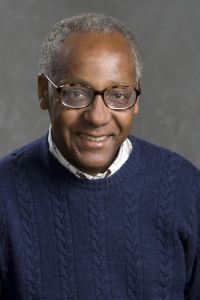 Psychologist Lonnie R. Snowden is Professor of the Graduate School in the Health Policy and Management Division in the School of Public Health, University of California at Berkeley. He also holds affiliated appointments in Berkeley's Psychology Department and in the UC Berkeley-UCSF Joint Medical Program, and he has held appointments in Berkeley's Institute for Personality and Social Research, at the Brown School, Washington University, St. Louis, and at RAND.
Professor Snowden's research focuses on mental health and other health services disparities in access and quality of care, and he approaches understanding these disparities from treatment systems and mental health policy perspectives. He has published more than 170 papers in the peer-reviewed research literature and has received 6 research grants from the National Institute of Mental Health, as well as receiving research awards from many other sources.He contributed to Mental Health: A Report of the Surgeon General and was co-scientific editor of Mental Health: Culture, Race, and Ethnicity: A Supplement to Mental Health: A Report of the Surgeon General.
His outstanding achievement awards include The American Psychological Association Award for Distinguished Contributions to Research in Public Policy, The Surgeon General's Exemplary Service Award, the Berkeley Citation, and the American Public Health Association's Steve Banks Mentoring Award.
Goldman School student and DACA recipient Vlad Stoicescu Ghica discusses what brought him to the US from Romania, student activism as an undergrad at UCLA, and what it was like engaging then-newly-installed UC President Janet Napolitano on the subject of DACA and immigration.
In Episode 2 of Talk Policy to Me, host Jasmine Jones speaks with immigrant rights activist and Goldman student Jesús Guzmán about his personal story, the future of DACA, and the complexities of growing up in a mixed-status family.
Speakers featured in this episode
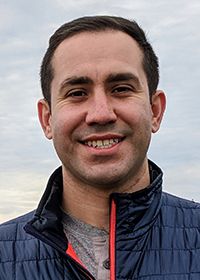 Jesús Guzmán is a second-year MPP candidate at the UC Berkeley Goldman School of Public Policy. While at GSPP, Jesús has served on the leadership teams for both the Labor Policy Group and the Berkeley Energy & Resources Collaborative.
Jesús has also served as the program analyst for the National Day Laborer Organizing Network. Jesús is currently completing his advanced policy analysis with the Marin Economic Forum with a focus on the housing shortage and income inequality. Jesús’ policy interests include labor economics, equity in energy policy, and economic development.
Prior to attending graduate school, Jesús was the Program Director for the Graton Day Labor Center in Northern California where he developed innovative workforce training programs and advocated for inclusive immigrant and labor policies.
Jesús was born in Jalisco, México and grew up in Sonoma County where he now resides with his wife Stephanie and daughter Victoria.