

 Which degree is right for you?
 Master of Public Policy
 Master of Public Affairs
 Doctoral Program
 Undergraduate Programs
 Global and Executive Programs

 Diversity, Equity, Inclusion
 Student Groups
 Alumni
 Directories

 Faculty
 Publications
 Working Papers
 Centers
 News Center

 Employment Stats
 Career Advising
 Career Resources
 Client-based Projects
 For Employers
 About GSPP
 Events
 Make a Gift
 Find a Program
 Find a Faculty Member
 Find a Center
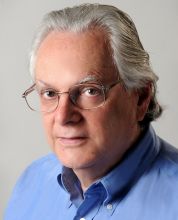
Lee Friedman is an economist at the Richard & Rhoda Goldman School of Public Policy at the University of California at Berkeley. He is a graduate of Dartmouth College and received his Ph.D. from Yale University. After two years of analytic experience working for the Vera Institute of Justice in New York City, he joined the Berkeley faculty in 1974 to help fashion the economics curriculum of the public policy program. He became Professor of the Graduate School and Professor Emeritus of Public Policy in 2016. His research is on a wide variety of issues, among them climate change policies, utility regulation, educational finance, criminal justice policies, agricultural subsidies, and consumer decision-making. His work strives to improve the effectiveness of microeconomic policy analysis on actual public policies and practices. He is a recipient of the David N. Kershaw Award for distinguished public policy research, and of the University of California's Distinguished Teaching Award. He is former Editor of the Journal of Policy Analysis and Management, and has served as President of the Association for Public Policy Analysis and Management.
Contact and Office Hours
Office 2607 Hearst, Room 211
Office Hours
By Appointment
About
Areas of Expertise
- Environment
- Regulation
- Public Finance
- Economic Organization
- Environmental Markets
- School Finance
- Utility Regulation
Research
Working Papers
Breeding Birds on EBMUD Horse-logging Areas 2002-2018: An Analysis of Area Census Surveys
GSPP Working Paper: (June 2020) ()
This paper analyzes the effectiveness of a public agency’s managerial decision intended to promote biodiversity on the lands that it owns. The agency is the East Bay Municipal Utility District (EBMUD) that provides water to most of the eastern San Francisco Bay Area. In the 1940s, it planted non-native Monterey Pines on a 366 acre parcel by the San Pablo Reservoir referred to as the horse-logging area. Late in that century, it decided that the nonnative Monterey Pines were not consistent with its goal of promoting biodiversity on the lands that it stewards, and that these lands should be allowed to return gradually and naturally to their native oak woodland. By the turn of the century, many of the Monterey Pines were weak and dying. Starting in 2002, EBMUD allowed these lands to be regularly surveyed to assess the breeding bird population in them. This paper analyzes the survey data from 2002-2018 to consider how the bird population has changed and if the change is one that promotes biodiversity. The paper finds that biodiversity has increased significantly by multiple measures. The paper rejects two alternative hypotheses to explain the biodiversity increase: (1) that it could be part of a broader regional trend of avian biodiversity increase, and (2) that it could be an artifact of the survey methodology. EBMUD’s decision to allow these lands to return gradually to their native vegetation was effective; it has resulted in a significant increase in avian biodiversity. This increase includes the presence in 2010-2018 of important species that were not present in 2002-2009, including migratory species like the Olive-sided Flycatcher, Ash-throated Flycatcher, and Black-headed Grosbeak. More generally, the evidence in this study supports the idea that native vegetation promotes biodiversity.
Consumer-Friendly and Environmentally-Sound Electricity Rates for the Twenty-First Century
GSPP Working Paper (March 2012)
This paper emphasizes the importance of bringing off-peak rates down to their
marginal costs so that the current mispricing of electricity does not act as a substantial
deterrent to the reduction of greenhouse gases, as through vehicle electrification. It
considers whether there are feasible, efficient and equitable time-varying electricity rate
structures that will be attractive to large numbers of residential customers with smart
meters. One family of rate structures called Household On and Off Peak (HOOP) plans meets
the efficiency criterion and is promising for meeting the distributional ones. HOOP plans
utilize marginal-cost time-based rates except for fixed infrastructure charges that vary by
customer group and cover nonmarginal expenses. Two alternative equity principles to guide
the assignment of the fixed infrastructure charges to different groups are considered. A
representative sample of California residences with usage data for each 15 minute interval
for a one year period enablessome preliminary tests ofthese HOOP designs. Simple
statewide versions of these designs replicate reasonably closely the actual bill distribution
that results from the independent and far more complex rate structures in use by the three
separate utilities that service these residences, suggesting that each utility could use HOOP
designs to meet the necessary criteria.
The Theory and Practice of Public Good Selection: The Case of Legal Aid
GSPP Working Paper (November 2005)
We began this research with two overlapping objectives. The first, and of most general
academic interest, is to gain insight about the following puzzle: why has there been
essentially nil implementation of any of the institutional ideas in the economics literature
for improving the efficiency of public goods decisions? These ideas have been proposed
and refined in literally hundreds of academic articles over the past 30 years, many of
them have undergone extensive laboratory testing, and we have an extensive network of
public policy practitioners and academics that might be expected to help bring them into
practice. The second objective is more specific and of immediate policy relevance: to
understand if there are opportunities to increase the effectiveness of the federal Legal
Services Corporation (LSC) by improving its decisions about its own internal public
goods, largely the provision of information to attorneys that directly service the eligible
low-income population. Providing these public goods requires locating, customizing,
synthesizing, and creating documents and templates, doing research, leading training, and
answering questions. We hope that our joint consideration of these two objectives might
be beneficial to each: identifying practical implications of the public goods literature may
benefit the LSC, and a case-study of LSC may identify general challenges that public
goods mechanism literature should address.
Wither, or Whither, Agricultural Crop Subsidies?
GSPP Working Paper (July 2003)
There is and always has been virtual consensus among economists that many agricultural
crop support programs cause inefficiency. Equally true, economists also know that whenever
there is inefficiency, there is "room for a deal" that mitigates it. However, the standard
political explanations for the persistence of these inefficient programs rely on the strength of
the farm lobby relative to the diffuse and difficult-to-organize consumers that pay for them.
This is unsatisfactory because, by the logic of economics, there is an opportunity for a deal
that would benefit the farm lobby in exchange for shedding the inefficient programs. If the
farm lobby could itself benefit, then we have no explanation for the persistence of the
inefficient programs. I examine this puzzle, and conclude that increased political
sophistication on the part of agricultural economists could have a high social payoff in terms
of reduced program inefficiencies over time.
Selected Publications
Does Policy Analysis Matter? Exploring Its Effectiveness in Theory and Practice. Lee S. Friedman, Editor
University of California Press (Oakland, CA: 2017).
How well can democratic decision making incorporate the knowledge and expertise generated by public policy analysts? This book examines the historical development of policy analysis, as well as its use in legislative and regulatory bodies and in the federal executive branch. The essays show that policy-analytic expertise effectively improves governmental services only when it complements democratic decision making. When successful, policy analysis fosters valuable new ideas, better use of evidence, and greater transparency in decision processes.
Consumers' Willingness to Pay for Renewable and Nuclear Energy: A Comparative Analysis between the US and Japan
“Consumers' Willingness to Pay for Renewable and Nuclear Energy: A Comparative Analysis between the US and Japan” (with Kayo Murakami, Takanori Ida, and Makoto Tanaka), Energy Economics, 50, July 2015, pp. 178-189.
We investigate through a survey-based choice experiment US and Japanese consumer preferences for two alternative fuels, nuclear and renewable sources, as energy sources that have potential to reduce GHG emissions. The results for the US are similar across the four states sampled concerning consumers’ WTP for the reduction of air emissions: people are willing to pay approximately $0.30 per month for a 1% decrease in GHG emissions. Second, the average consumer expresses a negative preference for increases in nuclear power in the fuel mix in both countries. Japanese consumers have a stronger aversion to nuclear energy than US consumers. Third, US and Japanese consumers will pay more for emissions reduction with the use of renewable sources. Finally, we have shown that results like those found in this study can be useful in helping to set parameters for renewable energy policies like FIT rates and RPS stringency.
Consumers’ Willingness to Pay for Alternative Fuel Vehicles: A Comparative Discrete Choice Analysis
Makoto Tanaka, Takanori Ida, Kayo Murakami, and Lee Friedman, "Consumers' Willingness to Pay for Alternative Fuel Vehicles: A Comparative Discrete Choice Analysis between the U.S. and Japan," Transportation Research Part A: Policy and Practice, 70, 2014, pp. 194-209.
This paper conducts a comparative discrete choice analysis to estimate consumers' willingness to pay (WTP) for electric vehicles (EVs) and plug-in hybrid electric vehicles (PHEVs) on the basis of the same stated preference survey carried out in the US and Japan in 2012. We also carry out a comparative analysis across four US states. We find that on average US consumers are more sensitive to fuel cost reductions and alternative fuel station availability than are Japanese consumers. With regard to the comparative analysis across the four US states, consumers’ WTP for a fuel cost reduction in California is considerably greater than in the other three states. We use the estimates obtained in the discrete choice analysis to examine the EV/PHEV market shares under several scenarios. In a base case scenario with relatively realistic attribute levels, conventional gasoline vehicles still dominate both in the US and Japan. However, in an innovation scenario with a significant purchase price reduction, we observe a high penetration of alternative fuel vehicles both in the US and Japan. We illustrate the potential use of a discrete choice analysis for forward-looking policy analysis, with the future opportunity to compare its predictions against actual revealed choices. In this case, increased purchase price subsidies are likely to have a significant impact on the market shares of alternative fuel vehicles.
Electricity Pricing and Electrification for Efficient Greenhouse Gas Reductions
Friedman, Lee. Report issued jointly by Next 10 and the California Council on Science and Technology, July 2, 2013
To reach its 2050 greenhouse gas reduction goal, California electricity must become cleaner and some activities that are now fossil-‐fueled must run partially or fully on the cleaner electricity—a process termed electrification. This paper recommends pricing policy reforms that will help to make decarbonization and electrification decisions effectively and efficiently. Its emphasis is on better alignment of prices with social costs. But participation of many other jurisdictions besides California is also necessary for mitigating climate change efficiently. Therefore California policymakers should look favorably upon linkage of its cap-‐and-‐trade program with jurisdictions like Quebec that adopt comparable goals and rules. Policymakers should also act soon to clarify state efforts to reduce GHG emissions beyond the 2020 mandate of AB 32—otherwise, the uncertainty lowers expected future allowance prices and deters investments and research and development efforts for cleaner generation, factories, buildings, and other infrastructure. Substantial reform is also needed with the retail pricing of electricity. Restrictions held over from the state’s 2001 electricity crisis are preventing 10 million California residences from receiving any carbon price signal at all, despite the fact that they would be compensated for this price increase with dividends. California also needs to transition its electricity customers on to time-‐varying rates that reflect the large social cost differences of providing service at different times of the day. The prevailing time-‐invariant system is an inefficient impediment to vehicle electrification—while it only costs about $.05 per kWh to provide offpeak electricity when recharging is convenient, many customers face rates that are more than 6 times this cost. The same misalignment of rates with costs is also hindering the development of grid storage important to manage increased use of intermittent renewable generation. It is hindering participation in demand response programs that avoid inefficient, high-‐emission peak generation, facilitate increased renewable generation, and can be used to provide better and cleaner ancillary services. Time-‐varying prices commensurate with costs of service would not only fix these issues, but they would encourage the development of enabling technology to further improve all of these GHG-‐reducing actions. Important fairness concerns about time-‐ varying rates can be addressed by several rate design methods, including HOOP (Household On and Off Peak) pricing that combines time-‐varying
marginal-‐cost based volumetric rates with a system of non-‐distorting graduated fees.
The Importance of Marginal Cost Electricity Pricing to the Success of Greenhouse Gas Reduction Programs
Friedman, Lee. Energy Policy, 39, No. 11, November 2011, pp. 7347-7360.
The efficient reduction of GHG emissions requires appropriate retail pricing of off-peak
electricity. However, off-peak electricity for residential consumers is priced at 331% above its marginal cost
in the United States as a whole (June 2009). Even for the 1% of residences that are on some form of
time-of- use (TOU) rate schedule, the off-peak rate is almost three times higher than the marginal
cost. A barrier to marginal-cost based TOU rates is that less than 9% of U.S. households have the
“smart” meters in place that can measure and record the time of consumption. Policies should be put
in place to achieve full deployment. Another important barrier is consumer concern about TOU rate
design. Two TOU rate designs (baseline and two-part tariff) are described that utilize marginal-cost based rates, ensure appropriate cost recovery, and minimize bill changes from current rate structures. A final barrier is to get residences on to these rates. Should a marginal-cost based TOU rate design remain an alternative for which residences could “opt-in,” or become the default choice, or become mandatory?
Time-invariant rates are a historical anachronism that subsidize very costly peak-period consumption and penalize off-
peak usage to our environmental detriment. They should be phased out.
Intertemporal Regulatory Tasks and Responsibilities for Greenhouse Gas Reductions
Deason, Jeffrey A. and Lee S. Friedman. The Journal of Policy Analysis and Management, 29, No. 4, Fall 2010, pp. 821-853
Jurisdictions are in the process of establishing regulatory systems to control green-
house gas emissions. Short-term and sometimes long-term emissions reduction goals are established,
as California does for 2020 and 2050, but little attention has yet been focused on annual
emissions targets for the intervening years. We develop recommendations for how these annual
targets—which we collectively term a “compliance pathway”—can be set, as well as what flexibility
sources should have to adjust in light of cost uncertainties. Environmental effectiveness,
efficiency, equity, adaptability, and encouraging global participation are appropriate criteria by
which these intertemporal policy alternatives should be judged. Limited but useful knowledge
about costs leads us to recommend a compliance pathway char- acterized by increasing incremental
reductions along it. This can be approximated by discrete linear segments, which may fit
better with global negotiations. Although the above conclusion applies to any long-term GHG
regulatory program, many jurisdictions will rely heavily on a cap-and-trade system, and the same
path- way recommendation applies to its time schedule of allowances. Furthermore, borrowing
constraints in cap-and-trade systems can impose substantial unneces- sary costs. To avoid most of
these costs, we recommend that sources be allowed early use of limited percentages of
allowances intended for future years. We also find that a three-year compliance period can
have substantial benefit over a one- year period. © 2010 by the Association for Public Policy
Analysis and Management.
Should California Include Motor Vehicle Fuel Emissions in a Greenhouse Gas Cap-and-Trade Program?
Friedman, Lee. The Journal of Comparative Policy Analysis, 12, No. 3, June 2010, pp. 215-248.
California should include vehicle fuels as part of a greenhouse gas reduction cap-and-trade program. Numerous political, administrative and economic reasons that suggest otherwise are considered. They include compliance and enforcement concerns, other regulatory programs for transportation, belief that gains from inclusion would be small, jurisdictional linkage issues, and both political skepticism and agency inexperience with market-based regulation. However, consideration of most of these strongly favors inclusion. Inclusion also creates an important competition between the electricity sector and other vehicle fuels to shrink
emissions over time as they vie to see which can most successfully replace ordinary gasoline and diesel.
Should the Regulator or the Market Decide When to Reduce Greenhouse Gas Emissions?
Friedman, Lee. The Economists' Voice, 6, No. 13, December 2009, Article 1.
Although much of what economists write is "inside baseball" — written for a small audience of specialists — economists have much to contribute to the public debate on a wide range of policy issues. We believe that anyone concerned about the central issues of the day, whether they are students, policymakers, or other citizens, would benefit from hearing economists debate what should be done about problems from budget balancing to global development, from intellectual property to outsourcing, from health care reform to how to provide old age security.
The Economists' Voice creates a forum for readable ideas and analysis by leading economists on vital issues of our day.
The California Electricity Crisis: The Long and the Short of It
Friedman, Lee S. International Journal of Public Policy, 4, No. 1/2, 2009, pp. 4-31.
Unexpected problems sometimes arise when governments attempt to introduce competition. The problem considered herein is market power and its exercise during the California electricity crisis of 2000–2001. In introducing competition, both transitional and long-run opportunities for firms to exercise market power may arise. California had transitional rules that severely limited participation of its utilities in forward markets and enhanced the market power of new generating entities. The transitional problems could have been avoided, but in the long-run a smaller market power issue should be expected to arise stochastically. This analysis suggests a new long-run institutional policy role: continual regulatory oversight of an industry that could be workably competitive most of the time. This explains why an agency like the Federal Energy Regulatory Commission should have a permanent Office of Market Monitoring. It also suggests why, in some electricity markets, stochastic market
power events may arise before capacity gets strained.
The History of Electricity Restructuring in California
Friedman, Lee. Journal of Industry, Competition and Trade, 2, No. 1/2, 2002, pp. 9-38.
This paper aims to provide an objective history of electricity restructuring in California from the mid-1990s to the immediate end of the “California Energy Crisis” in June 2001. We discuss the restructuring debate that led to the restructuring law (AB1890), and describe how the new structure worked after it took effect in April 1998. We discuss the course of events during the crisis, and factors contributing to it, including the supply-demand balance in California and in the West, rising gas prices, the complexity of the market design, market power, and the regulatory decision to cap retail but not wholesale prices.
Bounded Rationality versus Utility Maximization: A Test of Energy Price Responsiveness
Friedman, Lee S. Judgments, Decisions and Public Policy, Cambridge University Press (Cambridge, UK: 2002), pp. 138-173.
Behavioral decision theory draws on experimental research in cognitive psychology to provide a descriptively accurate model of human behavior. It shows that people systematically violate the normative assumptions of economic rationality by miscalculating probabilities and making choices based on one-economic criteria. Behavioral decision theory's ability to capture the complexity of human judgments and choices makes it a useful foundation for improving public policy analysis, design, and implementation. Originally published in 2001, this volume showcases the research of leading scholars who are working on applications of behavioral decision theory in diverse policy settings. It is designed to give policy analysts and practitioners who are non-psychologists a clearer understanding of the complexities of human judgment and choice, and suggest how to integrate behavioral decision theoretic insights into the policy sciences. This interdisciplinary volume should be insightful and useful wherever people's judgments and choices matter for policy formulation, acceptance, and effectiveness.
The Microeconomics of Public Policy Analysis
Friedman, Lee S. The Microeconomics of Public Policy Analysis. Princeton, NJ: Princeton UP, 2002.
This book shows, from start to finish, how microeconomics can and should be used in the analysis of public policy problems. It is an exciting new way to learn microeconomics, motivated by its application to important, real-world issues. Lee Friedman's modern replacement for his influential 1984 work not only brings the issues addressed into the present but develops all intermediate microeconomic theory to make this book accessible to a much wider audience.
Friedman offers the microeconomic tools necessary to understand policy analysis of a wide range of matters of public concern--including the recent California electricity crisis, welfare reform, public school finance, global warming, health insurance, day care, tax policies, college loans, and mass transit pricing. These issues are scrutinized through microeconomic models that identify policy strengths, weaknesses, and ideas for improvements. Each chapter begins with explanations of several fundamental microeconomic principles and then develops models that use and probe them in analyzing specific public policies.
The book has two primary and complementary goals. One is to develop skills of economic policy analysis: to design, predict the effects of, and evaluate public policies. The other is to develop a deep understanding of microeconomics as an analytic tool for application--its strengths and extensions into such advanced techniques as general equilibrium models and pricing methods for natural monopolies and its weaknesses, such as behavioral inconsistencies with utility-maximization models and its limits in comparing institutional alternatives. The result is an invaluable professional and academic reference, one whose clear explanation of principles and analytic techniques, and wealth of constructive applications, will ensure it a prominent place not only on the bookshelves but also on the desks of students and professionals alike.
In the News
Webcasts
Celebration of Lee Friedman
Date: November 18, 2016 Duration: 90 minutes

2009 Wildavsky Forum Panel Discussion: Changing Inequality: What produces and changes levels of inequality?
Dr. Rebecca M. Blank, Lee Friendman, Mike Hout, Steven Raphael, Robert Reich
Event: 2009 Wildavsky Forum - Dr. Rebecca Blank
Date: March 13, 2009 Duration: 117 minutes
Courses
List of Courses
Last updated on 02/22/2021