
 Which degree is right for you?
 Master of Public Policy
 Master of Public Affairs
 Doctoral Program
 Undergraduate Programs
 Global and Executive Programs
 Diversity, Equity, Inclusion
 Student Groups
 Alumni
 Directories
 Faculty
 Publications
 Working Papers
 Centers
 News Center

 Employment Stats
 Career Advising
 Career Resources
 Client-based Projects
 For Employers
 About GSPP
 Events
 Make a Gift
 Find a Program
 Find a Faculty Member
 Find a Center
February 10th 2017
Opening Session
Welcome and Introduction: Ned Helme, Executive Director, Goldman School, Center for Environmental Public Policy (CEPP)
Keynote Remarks: Janet Napolitano, President, University of California
Overview of the dialogue process: Ned Helme
Introductions
Initial Observations about Goals for the Dialogue
Selected participants will offer brief comments on their aspirations for the dialogue process
GHG and Clean Air Emissions – Current Knowledge
With a goal of providing context for the dialogue and a common set of initial facts, this session will cover: the current knowledge on criteria pollutant, air toxic, and GHG emissions from large sources, and planned improvements to these data; how existing data are being used to assess risks at the community level; and how new monitoring programs and innovations like sensors can increase the accuracy and timeliness of emissions data reporting.
- Integrated Inventory System for GHGs and Criteria Pollutants
- Karen Magliano, Chief, Air Quality Planning & Science, CARB
- Evaluation of Benefits and Impacts of GHG Limits in Disadvantaged Communities
- John Faust, Chief, Air, Community & Environmental Research, OEHHA
- Assessment of Health Risk at the Community Level – CARE program
- Dr. Phil Martine, Air Quality Engineering Manager, BAAQMD
- Monitoring in the South Coast AQMD and Challenges for New Sensors
- Dr. Olga Pikelnaya, Air Quality Specialist, SCAQMD
Group discussion on what more needs to be done to understand emissions and risks from air pollution in disadvantaged communities, and on promising avenues to improve accuracy and timeliness of data and monitoring.
Discussion of Policy Option Priorities for the Dialogue
Ned Helme will present the array of policy options that could be discussed over the course of the dialogue to optimize both criteria pollutant emissions reductions and reductions of greenhouse gas emissions. Based on prior discussions with most dialogue Members, Ned will present suggested initial priorities for discussion.
Respondents:
- Parin Shah, Senior Strategist, APEN
- Caroline Choi, Sr. Vice President, SCE
Group participation and discussion
GHG & Criteria Pollutant Direct Reduction Strategies: Oil Refineries as a First Example
This session will provide participants with a deeper understanding of the Bay Area Air Quality Management District’s proposed new regulatory programs for criteria pollutants, of CARB’s Scoping Plan proposal to reduce greenhouse gas emissions directly from refineries by 20%, and of alternative proposals.
- BAAQMD Efforts to Reduce Criteria Pollutant Emissions from Refineries and Reduce Toxics Risks from Stationary Sources
- Jack Broadbent, Executive Officer, BAAQMD
- Proposal for 20% Refinery Sector Benchmark-based GHG Reduction in Context of the Scoping Plan
- Edie Chang, Deputy Executive Officer, CARB
Respondents:
- Roger Lin, Staff Attorney, CBE
- Cathy Reheis-Boyd, President, WSPA
Group discussion will focus on how each of these programs might operate and how each might affect both criteria and GHG emissions.
Creation of Working Groups, Next Steps, & Summary – Ned Helme
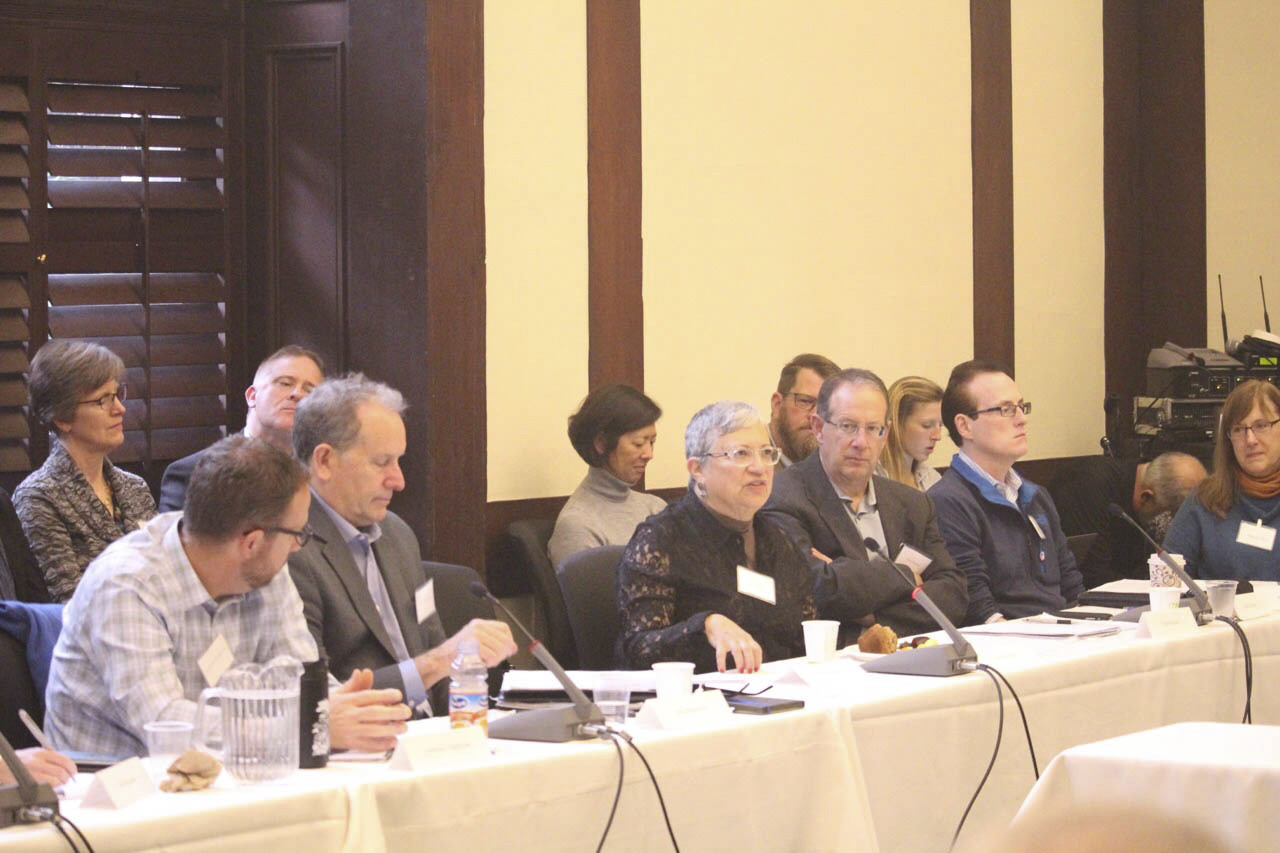
Jack Broadbent, Executive Officer, BAAQMD; Mary Nichols, Chair,
California Air Resources Board
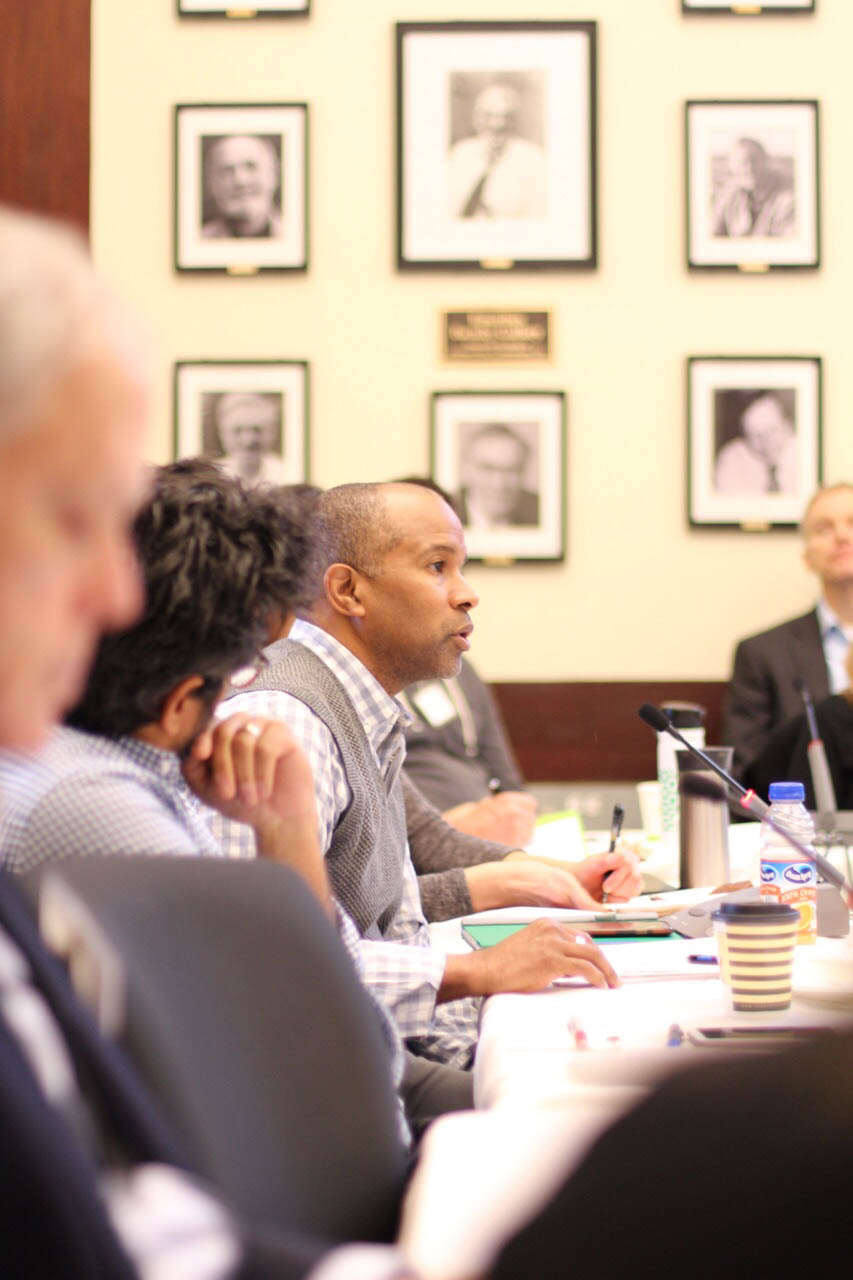
Arnie Sowell, VP, California Policy,
NextGen Climate
March 15th 2017
Welcome and Review of the Agenda
Ned Helme, Executive Director, Goldman School’s Center for Environmental Public Policy (CEPP) will welcome participants, review the goals, outcomes and key elements of the dialogue process, and walk through the 2-day agenda.
Discussion of Ideas for a Community-Scale Monitoring and Data System
This session will seek feedback from the Dialogue on the initial thoughts developed in the Data and Monitoring Working Group on defining an integrated data and monitoring system linking community-based sensor data systems with the current monitoring systems. Several speakers will share perspectives drawn from pilot programs on the ideal characteristics and budget requirements for developing, operating, and maintaining such a data and monitoring system. We will discuss objectives for such a system, along with key elements and outputs.
Speakers:
- Dr. Jason Low, South Coast Air Quality Management District
- Dr. Vanessa Galaviz, University of Washington
- Luis Olmedo, Comité Cívico del Valle
- Karen Magliano, CARB
Group participation and discussion
What do We Mean by an Equitable Transition for Residents and Workers in EJ Communities?
Carol Zabin of the Diaz Labor Center will share her perspective on possible objectives for equitable transition programs, key elements of such programs, and strategies to design programs that will receive the needed support and participation from the target communities.
Respondents:
- Joel Espino, The Greenlining Institute
- John Gioia, Contra Costa County Supervisor
- John Brauer, California Labor Federation
Group participation and discussion
Policy Options to Reduce Mobile Source Criteria and Toxic Air Pollutant Emissions in EJ Communities
Drawing on ideas generated in the Mobile Source Working Group, this session will highlight two promising avenues to mitigate emissions from mobile sources that are directly affecting EJ communities. Margaret Gordon and Brian Beveridge of the West Oakland Environmental Indicators Project will explain how improved freight management can help reduce truck diesel emissions in ports. Caroline Choi of SCE and Scott Murtishaw from the California Public Utilities Commission will discuss successes and strategies to expand electrification of heavy duty vehicles in ports and EJ communities.
Group participation and discussion
Adjourn
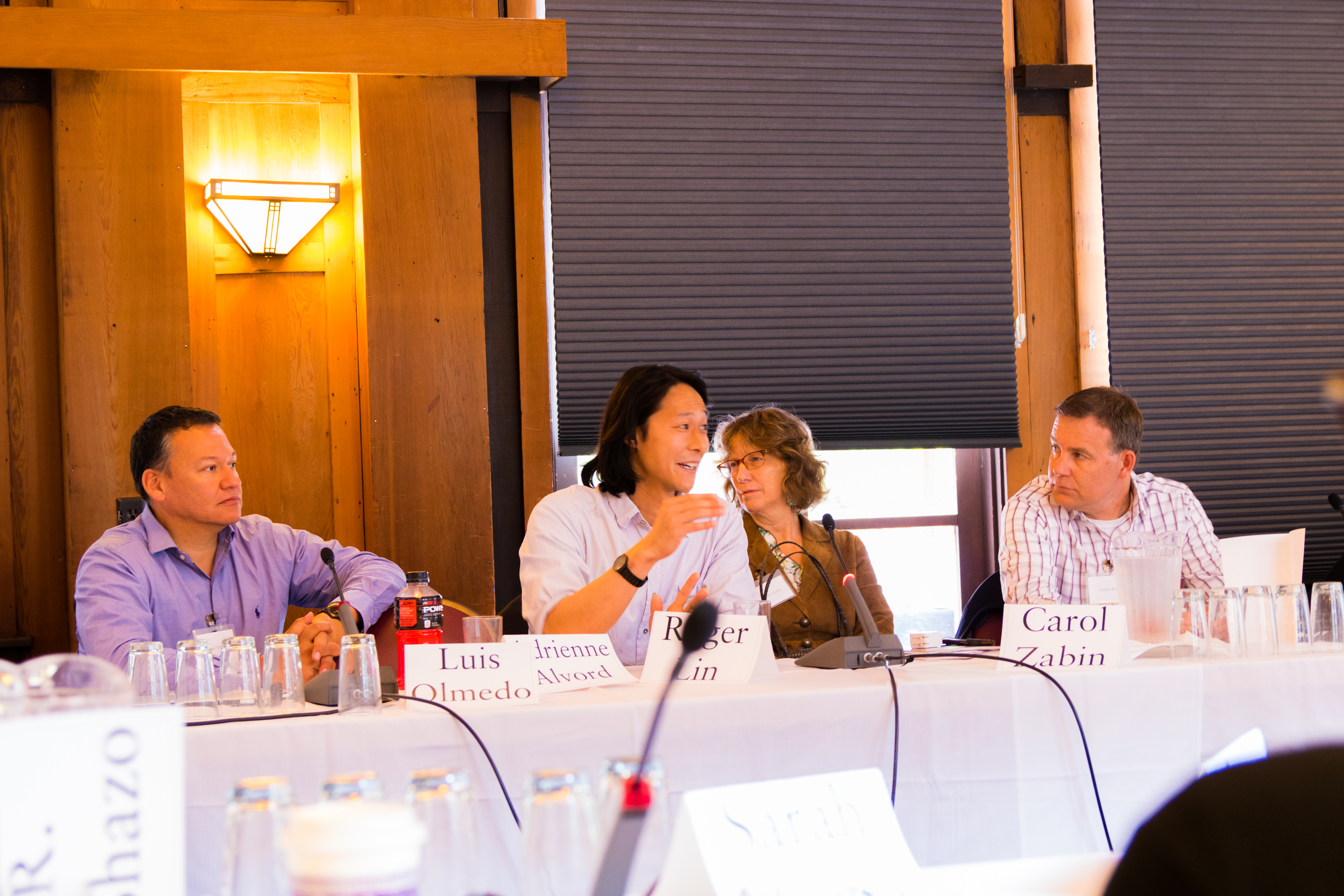
Luis Olmedo, Executive Director, Comite Civico Del Valle, Inc; Roger Lin,
Staff Attorney, Communitites for a Better Environment; and Carol Zabin,
Research Director, Center for Labor Research and Education
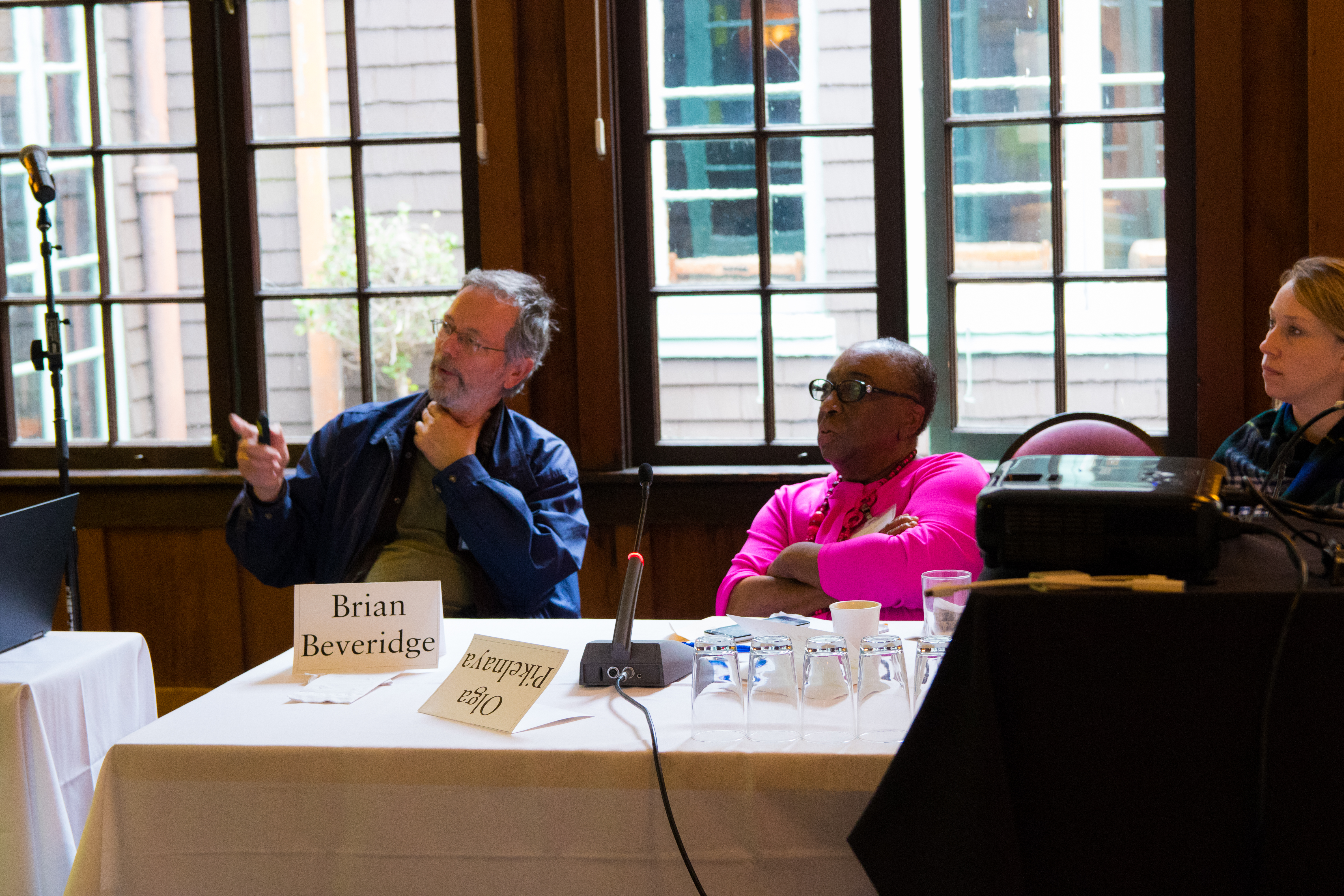
Brian Beveridge and Margaret Gordon, Co-Directors of the West Oakland
Indicators Project
March 16th 2017
Summary of Day 1 and Discussion of Key Policy Elements – Ned Helme
Policy Options to Reduce Emissions from Stationary Sources Affecting EJ Communities
Drawing from ideas raised in the Stationary Source Working Group, this session will highlight changes to California’s Clean Air and Air Toxics laws that could offer promising avenues to achieve meaningful reductions of these pollutants in disadvantaged communities. We will seek input from dialogue participants on these options, starting with the respondents.
Presenter: Ned Helme
Respondents:
- Roger Lin, CBE
- Steve Konig, Tesoro
- Jean Roggenkamp, BAAQMD
Group participation and discussion
Transformative Climate Communities
Randall Winston, Executive Director of the Strategic Growth Council, will describe the Transformative Climate Communities (TCC) program, including the program goals, approach and expected outcomes towards reducing greenhouse gases and criteria air pollutants while also addressing equity issues and enhancing economic opportunity and community resilience. The discussion will also focus on initial plans for the city of Fresno as a TCC case example
Respondents:
- Danielle Bergstrom, Policy Director, Central Valley Community Foundation
- Phoebe Seaton, Director and co-founder of the Leadership Counsel
Group participation and discussion
Day 2 Summary and Next Steps – Ned Helme
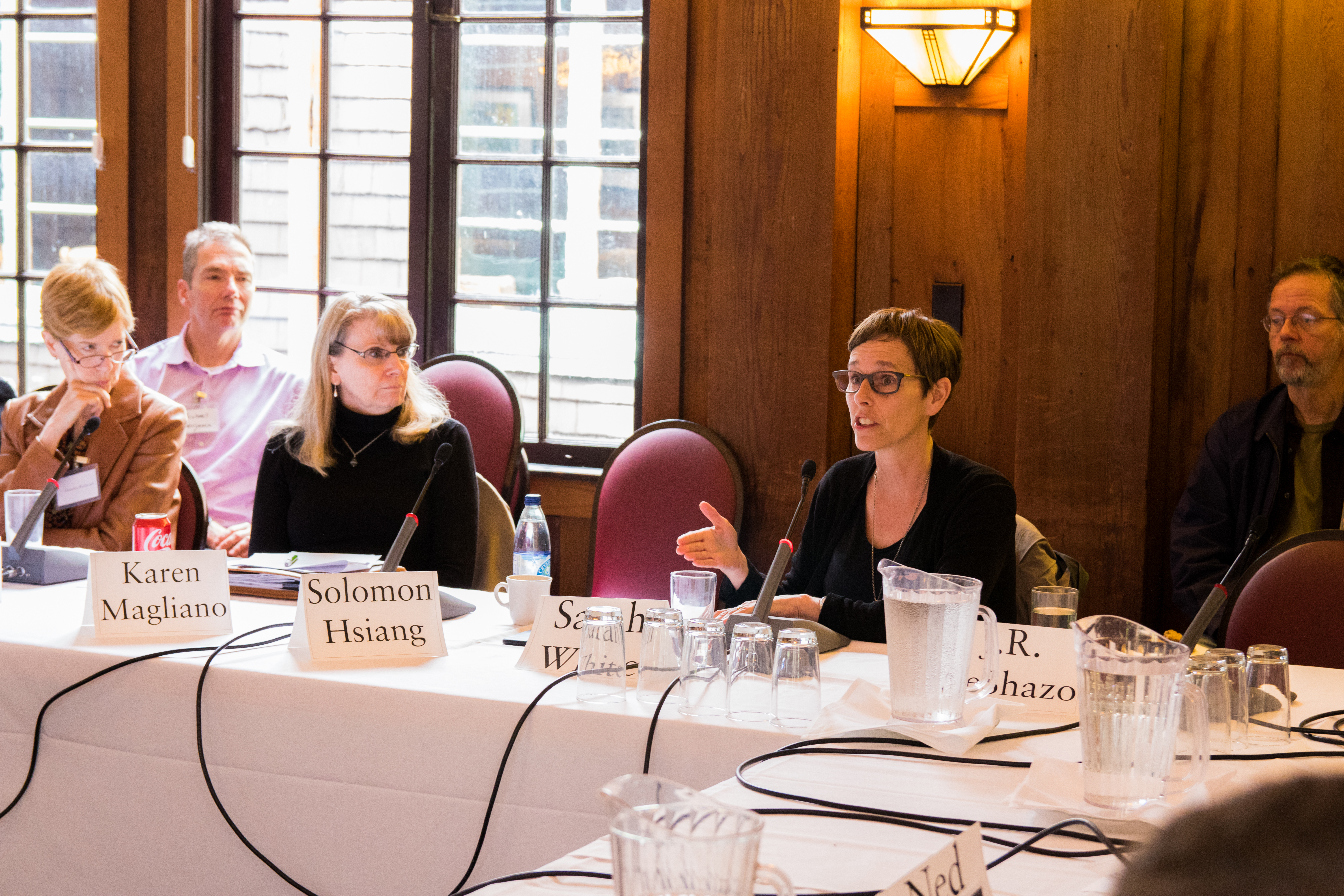
Dorothy Rothrock, President, CMTA; Karen Magliano, Divison Chief, CARB;
Sarah White, the Deputy Director of Equity, Climate and Jobs at the
California Workforce Development Board; and Brian Beveridge,
West Oakland Environmental Indicators Project
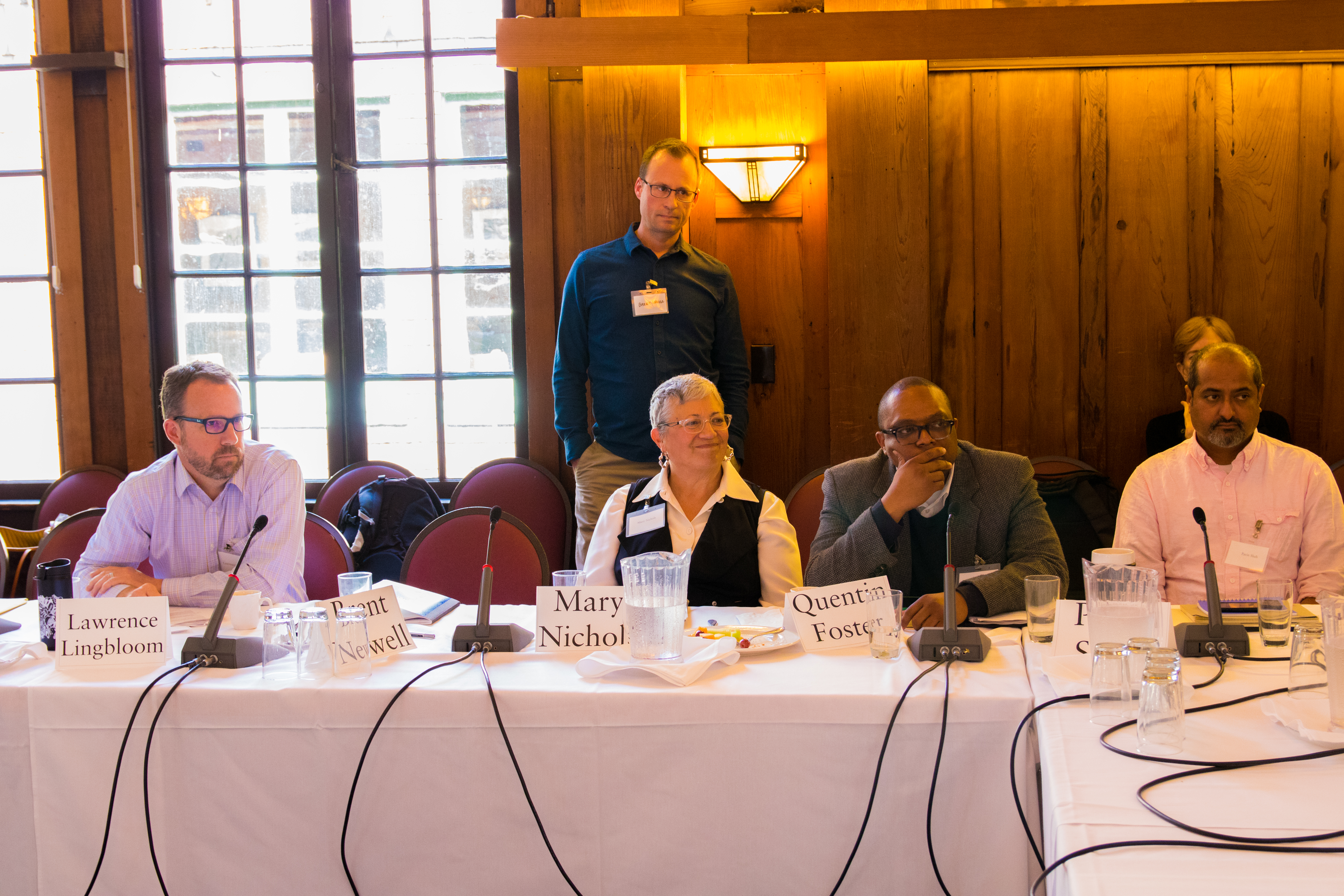
Lawrence Lingboom, Assembly Committee on Natural Resources;
Brent Newell, CRPE; Mary Nichols, CARB; and Quentin Foster, Director,
California and Energy, Environmental Defense Fund